Posts

From pig to human.

Image
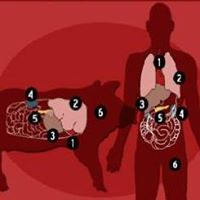
Human medicine has tried to overcome all organic dysfunctions that negatively affect health, and with a lot of effort, it has managed to considerably lengthen people's life expectancy. The latest research has shown that pork is a great choice for medicine. Transplants and implants of organs, glands, tissues, and cells, from pigs to people. In the closing years of the 21st century, the demand for transplants and implants grew to exceed the supply of human organs. This fact led the scientific community to look for alternatives such as xenotransplantation (transplantation between different species) with species such as the pig since this animal has a series of characteristics: similarity of the porcine genome with the human genome, and physiology of some of its organs with those of humans. The pig has turned out to be a good option for transplants of skin, pancreas, heart valves, pituitary gland, etc. The pig is a source of medicine. The pig is also being used to produce som...

Diabetes

Image
La diabetes se debe a la falta de peristalsis (peristalsis es el proceso rítmico de contracciones musculares que mueven la comida en el tracto digestivo) en el intestino delgado. Esta es una enfermedad metabólica. El plexo nervioso que actúa en la parte media del intestino delgado está conectado con el páncreas y un mal trabajo del intestino se refleja directamente con el páncreas. Cuando este plexo se cansa y  deja de mandar corriente nerviosa al páncreas, se produce estreñimiento y también la falta de insulina de manera que queda a cargo de los riñones la eliminación del azúcar. Hay que procurar que el intestino trabaje bien, pues así se normalizan todas las funciones. No es racional que a una persona diabética se le evite tomar azúcar natural. El hígado tiene  necesidad de seguir formando azúcar o la persona se agota. Lo que hay que procurar es que el motor nervioso trabaje para gobernar el páncreas. Cuando se toma dieta mixta, el plato de alimento crudo como e...

The pioneers of Cytotherapy

Image
      The purpose of Cytotherapy is to insert cells, organs, and tissues of piglets into the body, which reactivates altered systems, taking them back to homeostasis. The only possibility to replace old cells that have stopped producing the hormone secretions are through the application of young cells.       Highlights of the research come from Dr. Paul Niehams and Dr. Alexis Carrel Nobel Prize in Medicine, who were implanting young tissues of cattle and sheep in 1930 in patients with various diseases, surprising the scientific world of their time in their clinic in Switzerland and came to give therapeutic treatments to important figures in politics, business, the artistic environment, and religion, including Pope Pius XII,  having obtained great success in the recovery of these patients, offering them greater energy, vitality, and rejuvenation.       Upon his return from Europe, Dr. Heberto Alcazar Montenegro from UNAM (Autonomous Unive...

Los pioneros de la Citoterapia

Image
El propósito de la Citoterapia es el de insertar en el organismo células, órganos y tejidos de lechón en el organismo los cuales reactivan sistemas alterados llevándolos de vuelta a la homeostasis. La única posibilidad de sustituir viejas células que han dejado de producir secreciones de hormonas es mediante la aplicación de células jóvenes. Aspectos sobresalientes sobre esta investigaciones provienen del Dr. Paul Niehams y el Dr. Alexis Carrel premio Nobel de la Medicina, quienes estuvieron implantando en 1930 tejidos jóvenes de ganado y ovejas en pacientes con diversas enfermedades,   sorprendiendo al mundo científico de su tiempo en su clínica en Suiza y llegó a dar tratamientos terapéuticos a personajes importantes de la política, negocios, medio artistico y la religión entre ellos el   Papa Pio XII, habiendo obtenido gran éxito en la recuperación de estos pacientes, ofreciéndoles mayor energía, vitalidad y rejuvenecimiento.             ...

Chronic and degenerative diseases

Image
  Chronic and degenerative diseases are long-term conditions that often get worse over time. These diseases affect various systems and organs of the body and can limit a person's ability to lead a normal life. Some of the most common chronic and degenerative diseases are: 1 Cardiovascular diseases such as coronary heart disease, high blood pressure, stroke, and heart failure. 2 Neurological diseases; Alzheimer's, Parkinson's, multiple sclerosis , and Huntington's disease. 3 Chronic kidney diseases: such as kidney failure. 4 Metabolic diseases such as type I and II diabetes, obesity, and thyroid disease. 5-Osteoarticular diseases: rheumatoid arthritis , osteoarthritis, and osteoporosis. 6- Gastrointestinal diseases: such as inflammatory bowel disease, celiac disease, and Crohn's disease. 7- Chronic liver diseases; such as hepatitis and liver cirrhosis. 8- Etcetera. These diseases often require long-term treatment, ongoing medical treatment, and lifestyle change...

Las enfermedades crronicas y degenerativas.

Image
  Las enfermedades crónicas  y degenerativas son afecciones de larga duración que suelen empeorar con el tiempo. Estas enfermedades afectan a diversos sistemas y órganos del cuerpo y pueden limitar la capacidad de una persona para llevar una vida normal. Algunas enfermedades de las enfermedades crónicas y degenerativas más comunes son: 1 Enfermedades cardiovasculares como la enfermedad cardiaca coronaria, hipertensión arterial, el accidente cerebrovascular y la insuficiencia cardiaca.   2 Enfermedades neurológicas; Alzheimer, Parkinson , esclerosis múltiple y la enfermedad de Huntington.   3 Enfermedades renales crónicas: como la insuficiencia renal.   4 Enfermedades metabólicas como la diabetes tipo I y II, la obesidad y la enfermedad de la tiroides.   5-Enfermedades osteoarticulares: artritis reumatoides, la osteoartritis y la osteoporosis.   6- Enfermedades gastrointestinales,: como la enfermedad inflamatoria intestinal, ...

Menopause

Image
      Do you experience symptoms such as hot flashes, choking, night sweats, changes in mood and energy levels, vaginal dryness, urinary incontinence, bone loss, and decreased sexual desire?       Menopause is a natural process that usually occurs between 45 and 55 in women. It is caused by the decrease in the production of estrogen and progesterone hormones, which are responsible for producing the productive hormones of women.       Options for your treatment may include:       Hormone therapy       Lifestyle changes such as exercise and stress reduction       Medicines and creams       And in some cases, surgery may be suggested       And Cytotherapy.       Cytotherapy aims to introduce young glands or tissues into the body that reactivate the se...